What is Modern and Contemporary Art?
This introductory text provides a brief overview of Modern and Contemporary Art. Terms associated with Modern and Contemporary Art are indicated in CAPITALS and are elaborated on in the glossary or by hovering the cursor over the term.
Within the context of art history, the term MODERN ART refers to art theory
and practice, predominantly in Western Europe and North America, from the
1860s to the late 1960s - the period associated with MODERNISM. Modern Art is
defined in terms of a linear progression of styles, periods and schools, such as
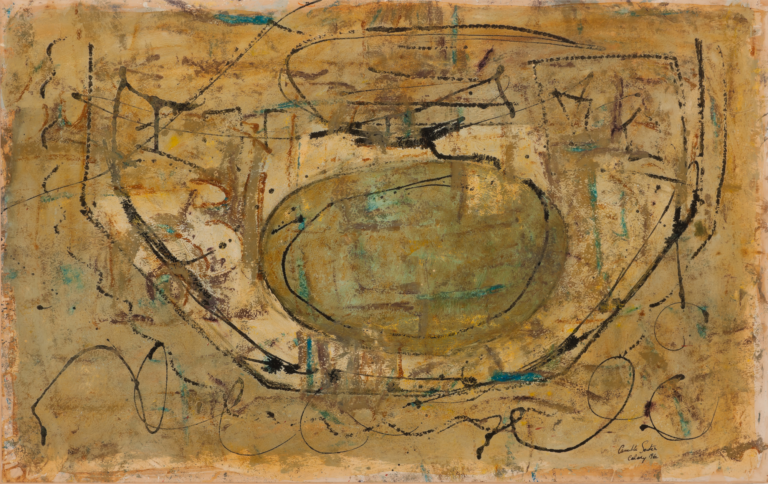
IMPRESSIONISM, CUBISM and ABSTRACT EXPRESSIONISM. In general usage,
there is considerable overlap and confusion between the terms MODERN and
CONTEMPORARY, both of which refer to the present and recent past. Modern
is a term which has a broad application depending on the context in which it is
used. It can refer to the present or the contemporary. In terms of social, political
and philosophical discourse, modern refers to the period that began with the
Enlightenment in the seventeenth century. More generally, modern can be used
to refer to all things since the early RENAISSANCE. The relative and temporal nature of the term resists a clear or fixed definition, and is subject to considerable
debate in terms of meaning and timeframe.
The term CONTEMPORARY ART refers to current and very recent practice.
Attributed, approximately, to the period from the 1970s to the present, it
also refers to works of art made by living artists. Contemporary Art tends to be
assessed thematically and subjectively, drawing on an expanded range of theoretical
and practical disciplines. Contemporary Art can be driven by both theory
and ideas, and is also characterised by a blurring of the distinction between art
and other categories of cultural experience, such as television, cinema, mass
media, entertainment and digital technology.
The period from the 1970s onwards is also described in terms of POSTMODERNISM,
a social, cultural and intellectual movement characterised by a
rejection of notions of linear progression, grand totalising narratives and critical
consensus associated with Modernism, favouring an interdisciplinary approach,
multiple narratives, fragmentation, relativity, contingency and irony.
In art history, the period associated with Modernism, 1860s – 1970s, is
characterised by significant social, cultural, technological and political developments
in the western world. Industrialisation, urbanisation, new technology, the
rise of the middle class, the secularisation of society and the emergence of a
consumer culture resulted in new conditions in which art was created, exhibited,
discussed and collected. The open market replaced patronage as the means of
financing art, giving artists the freedom to engage in more experimental and
innovative forms of practice. Inspired by new developments in technology, in
particular PHOTOGRAPHY and FILM, traditional practice and methodologies, including perspective and representation, were discarded in favour of more
experimental approaches, such as ABSTRACTION, resulting in new forms of
expression. Such innovative practice was referred to as AVANT-GARDE, and
Modernism comprises a series of sucessive avant-garde movements, such as
Impressionism, FAUVISM and DE STIJL. The modernist period was characterised by a belief in the progressive tendencies of modernity, evident in movements such as Cubism, CONSTRUCTIVISM and FUTURISM, and in architecture in the INTERNATIONAL STYLE and movements such as the BAUHAUS.
During the course of the twentieth century, disillusionment with aspects of the
modernist enterprise: the impact of industrialisation, global war and developments
in military technology, resulted in some artists adopting strategies of disruption
and subversion, evident in movements such as DADA and SURREALISM.
Alternatively, some artists resorted to more personalised and emotional forms
of practice, such as the EXPRESSIONIST movements DER BLAUE REITER and
DIE BRÜCKE. After World War II, the centre of Modernism shifted from Europe
to America and was dominated by ABSTRACT EXPRESSIONISM. Underpinned
by a theoretical framework of FORMALISM, which emphasised form rather than
content in both the creation and reception of the artwork, this ‘art for art’s sake’
argument contributed to the increased objectification and commodification of
the
Social, cultural and political changes during the 1960s resulted in
considerable shifts in arts practice. Artists were concerned with the increasing
commodification of art and the role of the art institution – the museum or
gallery – and its relationship to broader socio-economic and political processes.
Informed by new developments across a range of theoretical and practical
disciplines, such as FEMINISM, POSTCOLONIAL THEORY, PSYCHOANALYSIS
and CRITICAL THEORY, and drawing on earlier strategies of disruption, artists
devised new forms of practice, such as temporary, textual, performative or
didactic work, to complicate the perception of the art object as commodity.
CONCEPTUAL artists emphasised the primacy of the idea over the material art
object. Rejecting assumptions about art historical continuity and critical consensus
associated with Modernism, artists pushed out the boundaries
of what was possible in the creation, presentation and reception of art.
Experimental forms of practice, such as FLUXUS, MINIMALISM, POP ART
and PERFORMANCE ART, emerged in response to the perceived constraints and limitations of Modernism.
Emerging concerns about the ecology and the environment are evident
in LAND ART and ENVIRONMENTAL ART. Reconsideration of the relationship
between the artwork and its context, in particular its re-location outside the
parameters of the museum or gallery space, contributed to the development
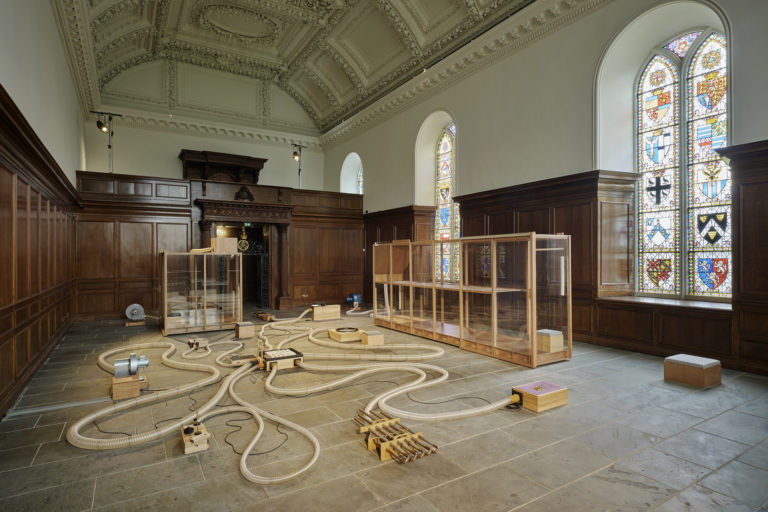
of SITE-SPECIFIC ART, INSTALLATION, SOCIALLY-ENGAGED ART and PARTICIPATORY PRACTICE. Equally, feminist and postcolonial discourse concerned with identity
formation, challenged the linear narrative of Western, Eurocentric, male-dominated
art history, favouring multiple narratives and HYBRID practice.
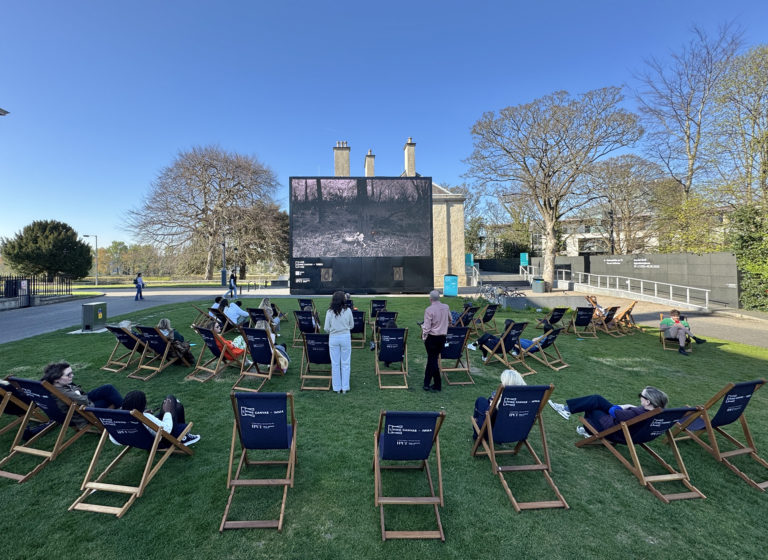
Advances in technology, particularly in FILM, VIDEO and Digital Technology,
contributed to the development of NEW MEDIA ART. The disestablishment
of the museum or gallery as the primary locus of display and consideration of
art, resulted in the emergence of a broader range of forums, such as BIENNIAL,
PUBLIC ART and ARTIST-LED INITIATIVES.
In the late 1980s and early 1990s, the rise of the art market resulted in an
increase in the number of GALLERIES, COLLECTORS, DEALERS and ART FAIRS, and also the establishment of many large-scale ART MUSEUM and
galleries in major cities. A growing trend towards collaboration between
artists and curators contributed to the raised profile of the CURATOR. In the
late 1990s, a renewed interest in the role of the viewer as participant and in
situating the artwork within a social context, contributed to the emergence
of new forms of collaboratory and RELATIONAL practice.
Contemporary Art in the twenty-first century comprises an ever-expanding
field of practice. Concerns with regard to the commodification and objectification
of the artwork continue to inform both the production and critique of
contemporary art. Attempting to identify the way forward, some theorists and
practitioners are revisiting the possibilities of Modernism, while others identify
the need for a new modernism, what the French curator Nicolas Bourriaud
refers to as ALTERMODERN, which addresses the globalised, transient, hybrid
nature of Contemporary Art.
|