How soon was now? What is Modern and Contemporary Art?
By Francis Halsall & Declan Long
1 In a Dark Room
(i)
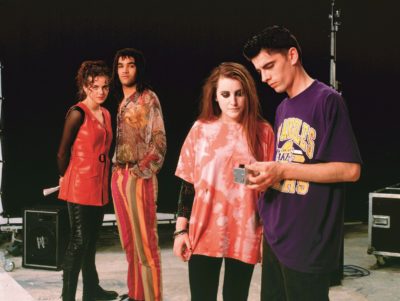
In a dark room, on a large screen, three Indonesian kids in matching purple
Adidas tracksuits, wrap-around sunglasses and sun-visors are singing a karaoke
version of a song by the 1980s pop group The Smiths. It is equally serious and
joyous. The piece is part of Phil Collins's work The World Won't Listen. It is a
great work of contemporary art and Phil Collins is an important artist because
his work is richly suggestive of a number of significant questions about national
identity, popular culture in a global context, and the role of the mass media in
representing these.
(ii)
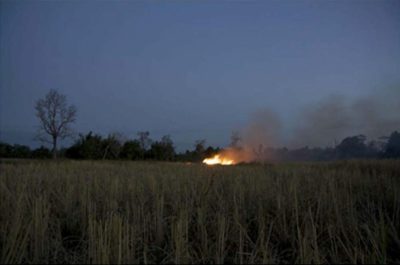
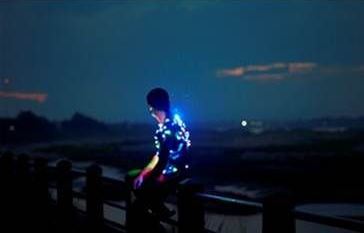
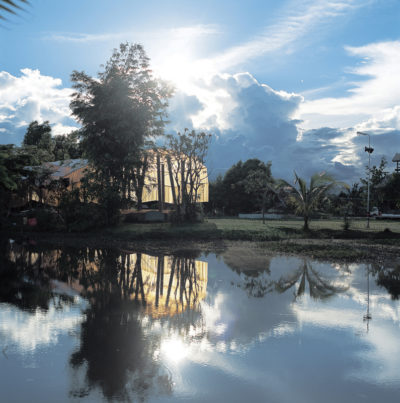
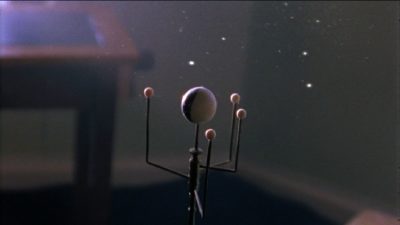
Another dark room, another projected scene: an evening view of an obscure
rural location. In the near-distance we see an odd elongated piece of architecture:
a fragile but imposing shelter, an elaborate cylindrical tent that seems
simultaneously out of place and yet somehow at home in this natural landscape.
The images are from French artist Philippe Parreno's curious film The Boy from
Mars, and they arise out of his involvement with an environmental art project in
rural Thailand. Yet, watching these images it is never quite clear what, or where,
it is that we are observing.
Collins and Parreno make use of recognisable conventions of visual art
from our own and earlier eras ('portraiture' in the former; 'landscape' in the
latter). Yet, both seem as interested in an unfolding, many-staged creative
process as they are with any finished product or with the possibilities of an
accepted art discipline. As such, they practice types of art, that, as the influential
curator Nicolas Bourriaud has argued, remain "around the edge of any definition"
drawing on much from what would customarily be considered beyond
the 'frame' of art, urging us to consider the place of art in the contemporary
world, while offering up images and experiences characterised by uncertainty
or disconcerting intensity.1
2 What Does Modern mean?
The two examples above were both made in the last ten years. But are they
also modern? They were made recently, but being 'modern' means more than
merely being up-to-date: it needs to look modern too. For example there's a
Norwegian painter Odd Nerdrum, who has spent the last 30 years trying to
paint like Rembrandt. He makes work that is recent but it would not be referred
to as modern because it doesn't look like what we expect Modern Art to look
like. Instead, it is deliberately old fashioned. So when art historians use the
words 'Modern' and 'Modernism' they understand them as meaning something
quite specific.
(i) When was Modernism?
In the sense of 'modern' meaning up to date, all art was modern once. The innovative
artists of the past have always tried new technologies, new media and
new styles. Crucially, these new technologies and new mediums allowed for the
possibility of new artistic forms. For example, when Giotto was painting the
Scrovegni Chapel in Padua, 1305, his use of fresco (watercolor on wet plaster)
as a medium was innovative and modern, and it allowed him to achieve the
integrated aesthetic scheme of the painting cycle. Over 500 years later Impressionists
like Monet were not only responding to the challenge of photography
and its ability to capture an impression of the world, but also using portable
easels and the newly invented, industrially processed, readymade tubes of paint
to make pictures outside of the studio in the open air.
But, if art has always been modern; does it ever reach a sell-by date? Can
it be that what was once modern can cease to be modern? Other art historical
periods do not have the same associated problems. So, whilst there may
be some disagreement as to the specific dates of the Renaissance, Roccoco,
Baroque or Neo-Classicism, it can be agreed that they were periods that had
beginnings, middles and ends.
Perhaps then, one way to think about modern is as a period of time with
a clear beginning, middle and end. Thought about in these terms modern might
mean the period of 100 years that began with Manet's painting Dιjeuner sur
l'Herbe, 1863, which was seen as shocking and rejected from the prestigious
Salon of fine art, not only because it was 'badly' painted with rough brushstrokes
and inaccurate perspective, but also because it showed a contemporary
scene of public nudity. This period is often regarded as ending with Pop Art
in the mid 1960s, when art became increasingly difficult to distinguish from
everyday consumer objects and the output of the mass media. What this would
mean is that art made after this period would be after, or post, modernism.
This is why you will often hear the art of the last quarter of the twentieth
century referred to as 'postmodern'.
However, such neat slicing up of the history of art is problematic. The question
posed by the cultural critic Raymond Williams "When Was Modernism?" is a
tricky one. On the one hand, art seems to lag behind modernism in other fields.
For example modern history is generally seen to have begun around 1500;
philosophy with Descartes (who published his Meditations in 1641) or Kant
(who published his three Critiques between 1781 and 1790) and the technological
boom of the Industrial Revolution in the nineteenth century is also seen as
an origin of modernity. On the other hand, art historians squabble as to where
Modernism began; perhaps with the Renaissance when artists began to be recognised
as 'geniuses' with their own distinct styles, or perhaps with the Salon
des Refusιs in Paris in 1863 and the exhibition of art refused by the academic
institutions. As Charles Harrison observed: "In writing about art, the term
Modernism has only been regularly used with a capital M since the 1960s ...
Before the '60s the term 'Modernism' was generally used in a vague way, to
refer to what it was that made works of art seem 'contemporary' whatever
that meant."2
(ii) How is Modernism?
Another way of thinking about what modern means in art is to think of it as an
attitude to making. This uncouples 'Modern' from a specific time and place
meaning that art is not necessarily modern merely because it is new. It would
also mean that examples from history could be identified as modern in their
outlook, such as El Greco, the seventeenth century painter whom Picasso
claimed was the originator of Cubism. Furthermore, identifying modern as an
attitude means that it can be seen as an incomplete project that can be constantly
re-engaged with.
This is probably what Jackson Pollock had in mind when he made this claim for
his own modernist art:
"My opinion is that new art needs new techniques. And the modern artists
have found new means of making their statements. It seems to me that
the modern painter cannot express this age of the aeroplane, the atom
bomb, the radio, in the old forms of the Renaissance or of any other past
culture. Each age finds its own technique."3
Just as the times change, so too must art. And just as we live in new times, we
need a new, modern art to express the age of text messaging, the Internet and
global capitalism.
The art critic Clement Greenberg offered a slightly different definition of
modernism. He claimed that modernist art was art that was about art . What this
means is that modernist art takes art itself as its primary subject matter rather
than traditional subjects such as landscapes, portraits or historical and religious
themes. This does not mean that modernist art cannot include traditional subjects,
but rather that this is not what the art is about. Look, for example, at the
William Scott painting Jug. The subject matter is a jug and a bowl. Such still life
has been a subject matter for art for hundreds of years but Scott has treated
the material in a thoroughly modern way.
(iii) Defining Modernism
The definition of modernist art that emerges is thus: that it provides a meaningful
expression of, and gives artistic and aesthetic form to three things: (i) the
specific time and place where it was made, (ii) the medium that it is made of,
and (iii) how it was made. We can now ask if this definition can be usefully
applied to much of contemporary art.
3 - When, What and How is contemporary art?
(i) Contemporary Whatever That Means
The tricky task of identifying a working definition of 'modern' is accompanied
by the equally testing challenge of defining the word 'contemporary'. Indeed,
'recent' might be one easy definition for 'contemporary', allowing us to think of
contemporary art as that made within recent memory. Another closely related
and very straightforward meaning of 'contemporary', and one that is entirely
true to the linguistic sources of the word, is 'with the times' (from the Latin
'con', meaning 'with', plus 'temp' meaning 'time'). As such, to be contemporary
is to be alert to the conditions of a particular moment in time, to be moving
with the tides of living history. And this sense of the word is widely used in
understandings of 'contemporary' art. Back in the 1980s, for instance, curators
at the Tate Gallery in London decided that the "art of the past ten years, on a
rolling basis", would provide a suitable set of parameters as they made plans
to develop a new 'Museum of Contemporary Art'.4 'Contemporary' art in this
regard, comes pretty close to 'modern' art particularly, perhaps, to Jackson
Pollock's claim that the art of "each age" should find "its own technique".
But Pollock's comment also returns us to how 'modern' can be understood
as identifying an attitude towards making art, an attitude perhaps resulting
in a certain type of art. Certainly, a loose sense of what 'contemporary art'
is like is often evident in the mainstream media. Coverage of exhibitions such
as the annual Turner Prize show, for instance, will often be based on hostile
presumptions about the prevailing tendencies in art today, with artists regularly
being characterised as pranksters or self-promoting provocateurs rather than
masters of a recognisable medium. However accurate such pictures are, it is of
course essential to remember the vital role played not just by the media but
also by the art market in manufacturing particular versions of a contemporary
art 'world' (as has always been the case throughout the history of art), with
certain forms of art reaching prominence as a result of their marketability.
But cast an eye over art magazines such as Artforum and Frieze expensive
colour publications packed with ads promoting the interests of the
commercial art scene and the difficulty of finding stable commonalities across
what is celebrated is quite apparent. Such magazines will often introduce us
to much that is overtly 'edgy': radical performance art that claims to question
moral norms, for instance; or varieties of activist art that propose creative
models of political resistance; or versions of installation and conceptual art
that confuse us as to what, and often where, the 'art' actually is. All seem to sit
comfortably side-by-side in such publications. Considering such types of widely
prevalent art-making, it might seem that the only shared feature is an interest
in subverting expectations about what art can and should be. Such tendencies
would, of course, be true to a legacy of avant-gardism in the arts, and in our
effort to capture something of what is 'contemporary' in art we could choose to
prioritise the continuation of a kind of rule-breaking spirit.
Yet, many celebrated contemporary art practices frustrate this view.
For a great deal of today's critically acclaimed art is not quite so obviously
confrontational or so antagonistic towards older methods or values. If, for
example, a great deal of recent art shows hostility towards principles of aesthetic
refinement in art, there remains a significant strain of art, highly regarded
by 'contemporary' critics, curators and collectors, that is concerned with
retrieving, or positively re-imagining, seemingly outdated notions such as craft
and beauty. The paintings of William McKeown for instance, make a sophisticated
and unorthodox case for beauty in art today, hinting to us that this idea
is essential as a way of freeing, and at the same time grounding, our imaginations.
Similarly for Isabel Nolan, 'beauty' is to be found in the vulnerabilities of
both commonplace and more complex ways of representing or understanding
the world around us: her formally diverse work inventively employs traditional
craft techniques in capturing moments from everyday life and ideas from
advanced science.
Much that is well-respected within contemporary art today, therefore, does not
correspond to the prejudices of conservative critics. Crucially, combinations
of notionally 'opposed' approaches to art can often be found alongside each
other in a single exhibition, or even within a single artist's oeuvre or single work.
Indeed, commentators on contemporary art have often stressed the diversity
of possibilities in art today and definitions and descriptions of contemporary
art will often stress the unregulated openness of this 'industry', acknowledging
its resistance to definition and description. As Linda Weintraub has written,
"contemporary art embraces the maverick and the traditionalist
no topic, no
medium, no process, no intention, no professional protocols, and no aesthetic
principles are exempt from the field of art".5
Such indications of contemporary art's multiple methodologies are certainly
at odds with any belief in the ongoing refinement of form a principle
once central to 'artistic progress'. For the philosopher and critic Arthur Danto,
the innovations of art after the 'modernist' era have therefore brought about, in
effect, an 'end' of art. This does not mean, he argues, an end of people making
art, but rather an end of a particular way of understanding art that focused on
the constraints of certain disciplines and mediums. Since pop art, Danto suggests,
"There is no special way works of art have to be".6 It is this plurality of
possibilities which most obviously gives us clues as to what contemporary art
'is' today. Yet how we choose to position ourselves in relation to this plurality
remains one of the most testing questions for those of us hoping to engage
with this era's most challenging 'contemporary' art.
(ii) Themes in Contemporary Art
Despite the exciting plurality of art today, recognisable constellations have
emerged around which art practices and debates have become clustered.
a) Participation
Participatory art takes the form of artists working with disparate groups of
people from different communities. This is not only a way of generating works
of art, but is also part of the work itself. Here are three examples: Untitled 1992
(Free), a working kitchen in a New York gallery set up by artist Rirkrit Tiravanija;
Tenantspin, 1999, a TV channel for the elderly residents of a Liverpool housing
estate set up by art collective Superflex; and Pimp my Irish Banger, 2009, a
collaborative art project in which artist Terry Blake worked with young people
from Dublin to paint car doors and bonnets that were later displayed in an outdoor
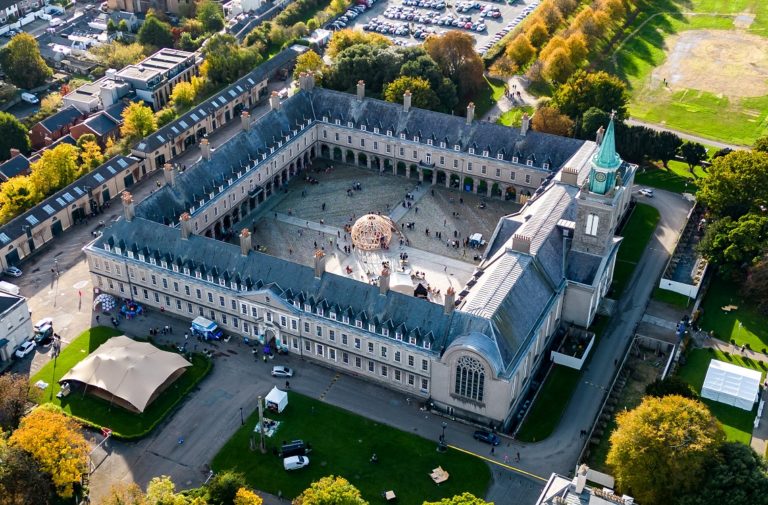
space at the National College of Art and Design, Dublin. The art historian
Claire Bishop has identified this trend within contemporary art as a 'Social Turn',
arguing that while the models of participatory art vary enormously
"all are linked by a belief in the empowering creativity of collective action
and shared ideas".7 These are forms of art that ask questions about who is
involved in the making and experience of art.
b) Site/place
Today's art often occurs in particular places and is specific to those places.
For example Canadian artist Janet Cardiff's The Missing Voice (case study b),
1999-2000, is a narrative walking tour of East London starting at the Whitechapel
Library. Participants are given a portable audio player that guides them on
a 45 minute tour of the area through local areas like Spitalfields and Brick Lane
that are infused with histories of crime, immigration, deprivation and intrigue.
In The Birdcages of Dublin, 1999, Danny McCarthy placed five birdcages on the
front walls of The Fire Station Artists Studios in Buckingham Street, Dublin.
Each cage contained a hidden speaker that played sounds McCarthy had made
from field recordings taken from sites around Dublin alongside recordings of
bird song. Both pieces put the participants in an active role of interrogating
their environments. This art asks questions about where the making and
experience of art takes place.
c) Cinematic
Many contemporary artists are interested in the moving image. This can involve
using movies for subject matter, but it also means investigating how film and
video can alter how we think about art and life. Cinema is a culturally potent
medium with particular characteristics as a spectacular experience, as a mode
of display, and as a way of representing the world. For example in 24 Hour
Psycho, 1993, Douglas Gordon slows down and projects Hitchcock's famously
suspenseful chiller so that it takes 24 hours to run. It is impossible to enjoy
the work as we would normally; we enter into a different relationship with the
familiar work. Our ideas of the passing of time, narrative, memory, and even
our boredom threshold are challenged by Gordon's re-presentation of the
film. Comparatively, a work such as Twelve Angry Films by Jesse Jones, 2006,
brings out an aspect of 'participation' in film culture, but through a process of
collaborative production (working with community groups) and by creating a
dedicated public space for screenings in the form of a drive-in cinema. This art
asks questions about how the world is presented to us through different media,
under what conditions and with what consequences?
d) Medium
Artists today continue to question what they are making art from and come
back to querying what art's forms mean. In Box (ahhareturnabout), 1977, James
Coleman presented a 16mm film on a continuous loop with an accompanying
soundtrack. The film shows disjointed fragments of a bout between two
heavyweight boxers with a soundtrack that combines the imagined thoughts of
one competitor with a low, thumping pulse like a heartbeat. It is a disorientating,
profoundly physical experience. The grainy and obscure flicker of the film,
when coupled with the jarring jump cuts, becomes part of the meaning of the
work. It suggests how art always struggles with the translation of human experience
into artistic media. Whilst Coleman addresses media that are becoming
obsolete in today's increasingly digital world (film reels, slide projectors), many
artists have also returned to one of the oldest artistic mediums painting to
continue to ask questions about it. Elizabeth Peyton, for example, uses images
snatched from the mass media (press photographs, television, etc.). The images
are used in such a way that you would never mistake the pictures for photographs;
instead they encourage you to think about what it means to put wet
paint on a surface and move it around. This art asks questions about what is
employed in the making and experience of art.
Conclusion
The above examples offer just a glimpse of the rich variety of art being made
today. It can take many forms, address many audiences and raise many questions.
It can often be baffling, infuriating and inscrutable. There is more art
now than there has ever been, and in a greater variety. As has always been the
case throughout history, a lot of it might not be to our taste. But the best art,
be it from the distant past, the modern age or our contemporary times, opens
up new worlds for us; new worlds of thought, of expression and feeling, new
worlds of poetic and political possibility. Art in the contemporary world is art
of this world: it can be by turns richly distracting and frustrating, thrilling and
testing; it is full of communicative difficulties and new possibilities; it brings the
challenging effects of today's reality home to us in all their vivid strangeness. It
tells us how soon now really is.
© Francis Halsall & Declan Long, 2011
- Nicolas Bourriaud, Relational Aesthetics, Dijon: Les Presses du Rιel, p. 25.
- Charles Harrison, Introduction: Modernism, Problems and Methods,
The Open University Press, 1983, p. 15.
- Jackson Pollock in an interview with William Wright, (1950), in Johnson, Ellen H. (ed.),
American Artists on Art from 1940 to 1980, Harper & Row, 1982.
- See Tate Glossary, www.tate.org.uk/collections/glossary.
- Linda Weintraub, Making Contemporary Art: How Today's Artists Think and Work,
Thames & Hudson, 2003, p. 8.
- Arthur C. Danto, After the End of Art: Contemporary Art and the Pale of History,
New Jersey: Princeton University Press, 1998, p. 47.
- Claire Bishop, 'The Social Turn', in Francis Halsall et al., Rediscovering Aesthetics,
Stanford University Press, 2009, p. 239.
|