About > Press Office
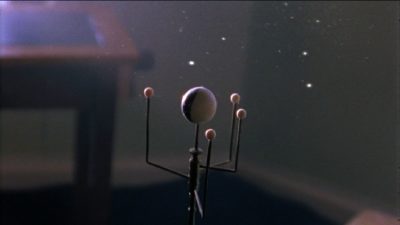
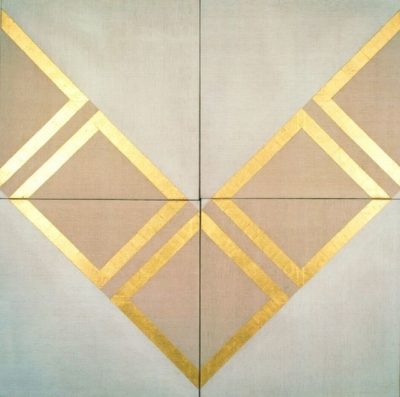
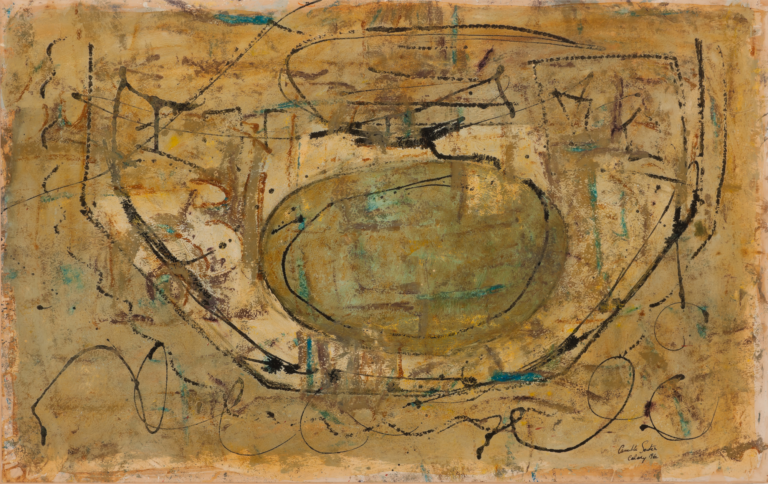
An exhibition of the Cut-Outs and Cut-Ups of Hans Christian Andersen and William Seward Burroughs at IMMAThe Irish Museum of Modern Art is delighted to announce the opening of the new exhibition Cut-Outs and Cut-Ups: Hans Christian Andersen and William Seward Burroughs, in the New Galleries on Wednesday 9 April 2008. Focusing on the cut-outs and cut-ups of Hans Christian Andersen and William Seward Burroughs, this exhibition is the first to compare these legendary writers and fascinating, but little-known, visual artists. Hailing from different origins and different periods, Hans Christian Andersen (1805-1875) and William Seward Burroughs (1914-1997) nevertheless shared many significant connections. Both were highly productive and revolutionary writers, intrepid travelers and larger-than-life personalities who developed important collaborative relationships. They were visionaries, who had a deep and long engagement with the visual arts. Though Andersen and Burroughs are known largely for their literary masterpieces, their visual work, has to date received little exposure. Key to the 124 works in this exhibition is the artists’ mutual engagement with cutting-out pictures and stencils which involve silhouettes and shadows. Their use of brilliant colours and metallic surfaces relate closely to their writings. The Andersen material consists of a wide range of drawings, cut-outs and picture books containing his original collages. The Burroughs artworks include paintings on paper and wood, collaborative projects with lifelong friend, the artist Brion Gysin – these include pages for The Third Mind, 1978, as well as their legendary Dreamachine. Both Andersen and Burroughs produced unique books which combined both images and words. In the 1960s Burroughs and Brion Gysin began creating scrapbooks, mixing fragmented images, texts and drawings. They also began to use the ‘cut-up’ technique which involved cutting and reassembling printed and drawn materials with knives or scissors – a technique also untilised by Burroughs in his Nova Trilogy, three experimental novels made from 1961 to 1964. Closely related to the cut-up novels were a series of scrapbooks including Black Scrapbook, 1963-64, Red Scrapbook, c. 1966-73, and Green Scrapbook, 1971-73. The Third Mind, a collection of image-filled pages created by Burroughs and Gysin in 1965, was published in 1978. This scrapbook brought together, through the cut-up technique, a compilation of Burroughs and Gysin’s previous works, as well as fragments from various day-to-day sources. William Seward Burroughs was born in 1914 in St Louis to a wealthy family. He studied at Harvard and travelled to Mexico, Colombia, Peru and Morocco between 1945 and 1950. Appropriating the cut-up technique developed by Gysin in the 1950s, Burroughs produced some of his most influential writings, extending the language first developed in his groundbreaking novel Naked Lunch, 1959. While living in Paris, London, New York and Lawrence, Kansas - where he died in 1997 - Burroughs never stopped experimenting with writing, film, sound and visual art. The exhibition is curated by Hendel Teicher, independent curator and art historian. Curator’s Talk A fully-illustrated catalogue accompanies the exhibition. Contributors include notable Andersen and Burroughs scholars Jens Andersen, Francine Prose, Raymond Foye and José Ferez Kuri. The catalogue also includes texts by Hans Christian Andersen and William Seward Burroughs, an essay by Hendel Teicher and a foreword by Enrique Juncosa, Director, IMMA. Cut-Outs and Cut-Ups: Hans Christian Andersen and William Seward Burroughs continues until 29 June 2008 Opening hours:
|
| Press Office
|
Corporate
Events |
Customer
Charter |
Sitemap
|
Print Version |
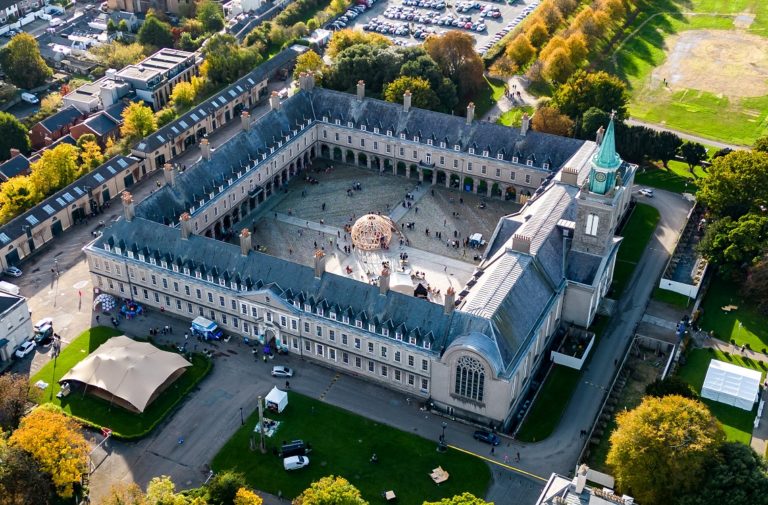
Irish Museum of Modern Art, Royal Hospital, Kilmainham, Dublin 8, D08 FW31, Ireland
Tel: +353-1-6129900, Email: info@imma.ie