What is Participatory and Relational Art?
This introductory text provides a brief overview of Participatory and Relational Art. Terms associated with Participatory and Relational Art are indicated in CAPITALS and are elaborated on in
the glossary or by hovering the cursor over the term.
PARTICIPATORY ARTS refers to a range of arts practice, including RELATIONAL AESTHETICS, where emphasis is placed on the role of the viewer
or spectator in the physical or conceptual realisation and reception of the
artwork. The central component of Participatory Arts is the active participation
of the viewer or spectator. Many forms of Participatory Arts practice
foreground the role of collaboration in the realisation of an artwork, deemphasising
the role of the professional artist as sole creator or author of the
artwork, while building social bonds through communal meaning and activity.
The term Participatory Arts encompasses a range of arts practices informed
by social, political, geographic, economic and cultural imperatives, such as
COMMUNITY ARTS, ACTIVIST ART, NEW GENRE PUBLIC ART, SOCIALLY-ENGAGED ART and DIALOGICAL ART.
Participatory Arts can be artform specific, such as visual arts, music or drama,
or they can be INTERDISCIPLINARY involving COLLABORATION across a range
of artforms. They can also involve collaboration with non-art agencies, such as
social inclusion organisations, local authorities and community development
groups. The artwork produced can take many forms and, due to the collaborative
nature of Participatory Arts, this may comprise an event, a SITUATION or a
PERFORMANCE, rather than the production of an object. The interactions that
emerge from these encounters are often translated into DOCUMENTARY
mediums, such as PHOTOGRAPHY, VIDEO or TEXT.
The emergence of Participatory Arts is informed by earlier AVANT-GARDE
movements such as DADA, CONSTRUCTIVISM and SURREALISM, which raised
questions with regard to notions of originality and authorship and challenged
conventional assumptions about the passive role of the viewer or spectator.
In doing so they adopted an anti-bourgeois position on the role and function
of art.
The social, political and cultural upheavals of the 1960s and the perceived
elitism, social disengagement and COMMODIFICATION of art associated with
MODERNISM contributed to new forms of politicised, reactionary and socially
engaged practice, such as CONCEPTUAL ART, FLUXUS and SITUATIONISM. The
development of new technologies and improved mechanisms of communication
and distribution, combined with the break down of medium-specific artforms,
provided greater possibilities for artists to physically interact with the viewer.
New forms of practice were developed by artists, who proactively sought out
new artistic mediums to shape mutual exchange through open and inclusive
practices. These new forms of practice appropriated non-hierarchical social
forms and were informed by a range of theoretical and practical disciplines,
such as FEMINISM, POSTCOLONIAL THEORY, PSYCHOANALYSIS,
CRITICAL THEORY and LITERARY THEORY. While questions of authorship raised concerns about who participates in the definition and production of art, the
relationship of the artwork to its audience became a central axis for these
emerging forms of arts practice.
The presumed authorial control of the artist was challenged in
particular by Conceptual artists who placed an emphasis on the idea or
concept rather than a tangible art object. They created artworks which could
be realised by others without the direct intervention of the artist. Artworks
could take the form of a set of instructions, where participants were directly
involved in the co-creation of the artwork. Instructions were communicated
through a variety of media, such as photography, video, drawing, text,
performance, SOUND, SCULPTURE and INSTALLATION.
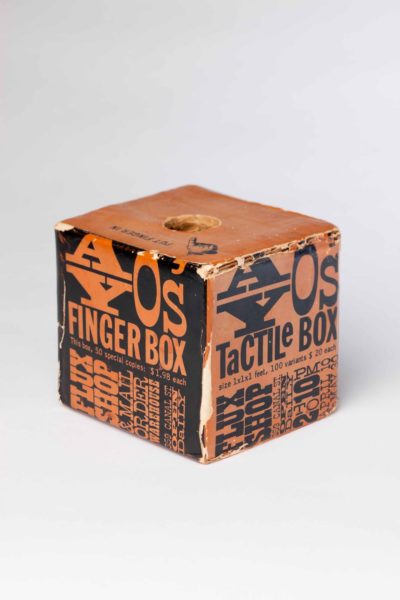
Similarly, Fluxus artists rejected traditional principles of craftsmanship,
permanency of the art object and the notion of the artist as specialist. Fluxus
artists viewed art not as a finite object but as a time-based experience,
employing performance and theatrical experiments. Fluxus artists were
interested in the transformative potential of art through collaboration.
Spectators were encouraged to interact with the performer, while plotless
staged events left artworks open to artistic chance and interpretation.
Artworks were realised in a range of media, including musical scores,
performances, events, publications, MULTIPLES and assembled environments
constructed to envelop the observer. These initiatives were often conceived
with workshop characteristics, whereby the artist operated as facilitator,
engaging the audience in philosophical discussions about the meaning of art.
Artworks often took the form of meetings and public demonstrations,
HAPPENINGS or SOCIAL SCULPTURE, whereby the meaning of the work was
derived from the collective engagement of the participants. A common goal
of Fluxus, Happenings and Situationist events was to develop a new synthesis
between politics and art, where political activism was mirrored in streetbased
arts practice as a radical means to eliminate distinctions between art
and life.
The development of Participatory Arts practice has also been informed
and shaped by the development of PUBLIC ART programmes, many of which
evolved in the context of large-scale urban renewal and regeneration
initiatives. Participatory Arts programmes with their emphasis on public
engagement and participation can be an important element in both the
consensus-building process and critique of such regeneration initiatives.
The economic downturn and social political turmoil of the 1980s
combined with the alienating effects of capitalism and its impact on
community structures, resulted in an increasing awareness of the potential of
the arts as a vehicle to address social issues, in particular issues of social
inclusion. Influenced by earlier forms of socially-engaged and activist art,
many Community Arts organisations and initiatives emerged during this
period. Community Arts emphasised the role of art in bringing about social aspects of the art initiative were imperative. Dialogical Aesthetics is a term
used to describe the active role of dialogue in such socially-engaged art.
During this period, state bodies funding the arts began to impose
contingencies on their client organisations, such as MUSEUMS, GALLERIES,
theatres and arts organisations, with regard to encouraging public participation
in the arts, especially on the part of marginalised or socially excluded constituencies.
The utilisation of the arts to address non-arts agendas contributed to an
ongoing debate about the role of art and its relationship to its audience, which
continues to inform consideration of Participatory Arts today.
In the late 1990s participatory concepts have been expanded upon by a
new generation of artists identified under the heading of RELATIONAL ART or
Relational Aesthetics. This is a term coined by the French curator Nicolas
Bourriaud to describe a range of open-ended art practices, concerned with the
network of human relations and the social context in which such relations arise.
Relational Art also stresses the notion of artworks as gifts, taking multiple
forms, such as meals, meetings, parties, posters, casting sessions, games,
discussion platforms and other types of social events and cooperations. In this
context, emphasis is placed on the use of the artwork. Art is regarded as
information exchanged between the artist and the viewer which relies on the
responses of others to make it relational.
In response to the rapid acceleration of real time communications in the
twenty first century a new term, ALTERMODERN, also devised by Bourriaud,
proposes an alternative to the conceptual lineage of POSTMODERNISM.
According to Bourriaud, the opening of new market economies and the mobility
of artist and audience has stimulated new models for political and cultural
exchange and participation. Through global distribution systems, artists can cut
across geographic and political boundaries. A new cultural framework
consisting of diaspora, migration and exodus offers alternative modes of
interpretation and understanding of the artwork. The decentralisation of global
culture presents new formats for exchange between artist and audience, which
are continually susceptible and adaptable to readily-available technologies.
DIGITAL TECHNOLOGY and the INTERNET'S global social networks can
promote a sense of participation without the physical gathering of people in
any one location. This represents a fundamental shift in traditional notions of
community and our experience of artworks.
Participatory and Relational Art raise important questions about the
meaning and purpose of art in society, about the role of the artist and the
experience of the audience as participant. Many arts organisations and
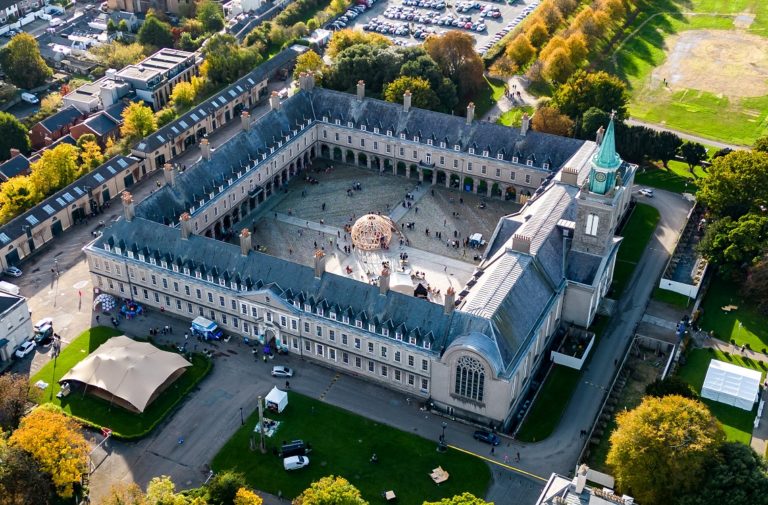
museums and galleries, such as the Irish Museum of Modern Art, integrate the
inclusive principles of Participatory Arts in their policy and practice, informing
strategies for programming and audience development to provide opportunities
for meaningful engagement with Contemporary Art.
|