IMMA Residency Programme > Projects Archive
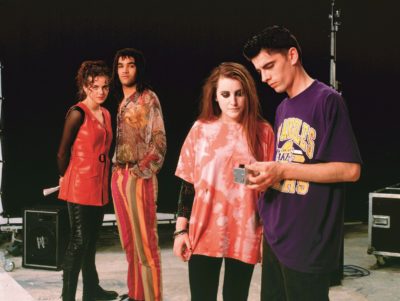
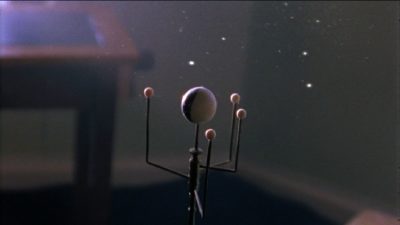
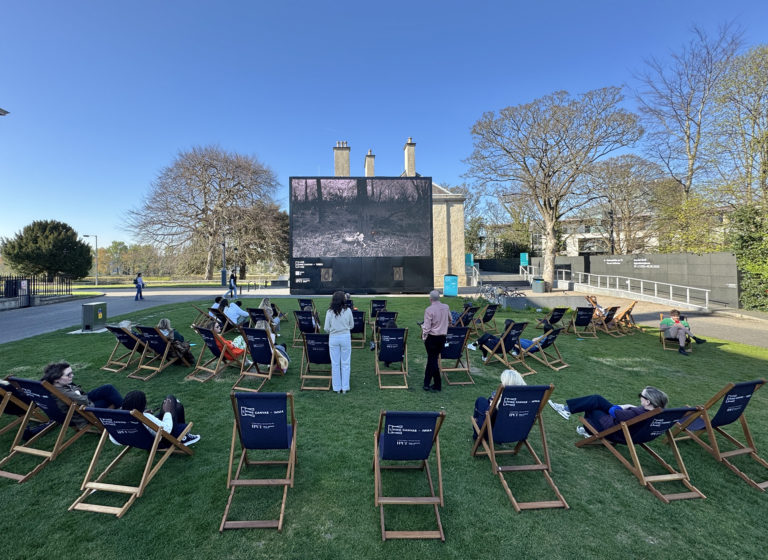
Anita Di BiancoProcess Room, 24.07.08- 03.08.08 Anita Di Bianco’s films examine, modify and re-work existing and re-imagined characters from cinema and literature – excerpting and adapting texts of such writers as Gertrude Stein, Jean Gênet, and Marguerite Yourcenar. Three of her films will be screened to give an overview of her predominant practice over the last number of years. Di Bianco’s videos and films have been shown at PS1 in New York; The Rotterdam Film Festival, Les Laboratoires d’Aubervilliers, Paris; The Salzburger Kunstverein, Cinematexas film festival, Austin; Galerie Elisabeth Kaufmann, Zürich and doggerfisher, Edinburgh. She has screened her films and lectured on the politics of cinematic re-enaction at Klartext! The Status of the Political in Contemporary Art in Berlin, at the Society for Cinema and Media Studies in London, and at Yale University’s film school. Upcoming in autumn 2008 are exhibitions at K21 in Dusseldorf, Germany and at Galeria Visor in Valencia, Spain. DISAFFECTION AND DISAFFECTATION 50 min, DV format Suffocating flowers, envious looks, ambiguous gestures, misappropriations of lines and roles, exchanges alternating between simmering hostility and saccharine adoration reveal the tempered indignities of Disaffection and Disaffectation. Using translucent strategies of exaggeration and uncontrolled disclosure, two actors volley the three roles of Jean Gênet’s Les Bonnes (The Maids) between themselves, their contrived boudoir, and the camera. Alternately parading, fixating on, and glossing over the crude markers of its own self-conscious reconstruction, this particular re-working of Gênet’s often-revisited play, unfolds and refolds back onto its own cluttered, claustrophobic staging. Du rêve et des drogues / Dreaming and Drugs Du rêve et des drogues / Dreaming and drugs presents a chapter from a 1980 interview with the writer Marguerite Yourcenar. Played by Jean-Baptiste Naudy, Yourcenar elaborates the aesthetic structure of dreams, diagrams relations between scholarly knowledge and imagination, and insists on the formidable presence of re-constructed characters in the realm of the historical, discussing the médiumnique relationship between the consciousness of writers and that of the characters they set to paper. Ballad in Plain D A film shot in two disappearing locations in Brussels, the Cité Administrative and the Greenwich Bar, temporarily emptied of inhabitants but full of specters and ghostly presences, suggested most directly by the entranced performance of actor Lucy McKenzie. 'Ballad in Plain D' takes as its source W.G. Sebald’s Campo Santo, ruminating on the status of ghosts and unworldly beings, anxious visitors and exiles dwelling in extraterritoriality, in marginal and temporary spaces. In Sebald’s writing, these “fleeting transparent beings of uncertain provenance and purpose” metaphorically echo the fixed, quasi-transcendental gaze of actors within the motionless frame of early film, as well as popular beliefs about the presence and influence of the dead in the realm of the living. Suggesting that Kafka’s writing has the quality of noctambulism, or that Nabokov’s appearance in evening dress in films shot in Berlin in the 1920s might both be understood as manifestations of wandering spirits dwelling in hazy or uncertain territory. For a printable version of this information please download the following document Click |
| Press Office
|
Corporate
Events |
Customer
Charter |
Sitemap
|
Print Version |
Irish Museum of Modern Art, Royal Hospital, Kilmainham, Dublin 8, D08 FW31, Ireland
Tel: +353-1-6129900, Email: info@imma.ie